
Any hospital system
We read from your existing database where a link is possible, and from spreadsheets where it is not. Both routes produce the same numbers.
Prism turns the data your Bengaluru hospital already records — admissions, bills, receipts, stock — into dashboards management can question down to the individual transaction.
Book a pilot in BengaluruPrism is hospital management intelligence software. It reads data from your existing hospital information system, or from spreadsheets you upload, and turns it into dashboards covering revenue, collections, receivables, occupancy, length of stay, pharmacy, inventory and leakage control. Every figure drills down to the individual transaction.
You do not need to be a Caresoft customer, and you do not need to replace anything.
We read from your existing database where a link is possible, and from spreadsheets where it is not. Both routes produce the same numbers.
Caresoft has run hospital software in India for twenty years, across 1,000+ hospitals and 12+ countries. Support is in your time zone and your language.
Built for Indian hospital practice: financial-year reporting, TDS and TCS handling, TPA and corporate payer mix, and NABH indicators.
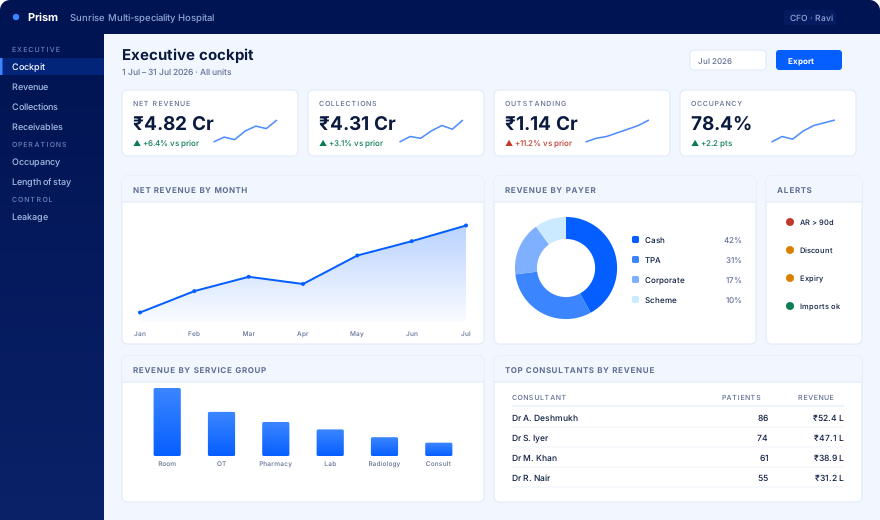
Illustrative data shown.
By service, doctor, ward, payer and counter, drillable to the bill.
What is owed, by whom, and for how long — net of TPA deductions and TDS.
Ward by ward, day by day, against your real bed count.
Bills modified after saving, rates below the master, back-dated postings.
Margin, expiry exposure and dead stock, reviewed daily rather than monthly.
Type a question in plain English. Pin the answer as a permanent tile.
No. Prism is a separate product and works with any hospital information system. Where a direct database link is possible we read from it; where it is not, your team uploads spreadsheets and Prism builds the same dashboards from those. Hospitals running Caresoft HIS get a faster start because the schema is already understood, but that is a head start, not a requirement.
Yes. The spreadsheet route exists for exactly this. You export the data you are willing to share, upload it, and Prism runs the same transformations it would have run over a live link. The numbers come out identical. Many hospitals begin this way and connect the database later once they trust the output.
No. Prism copies data into its own reporting database and every dashboard runs against that copy. The login it uses on your system has read rights only and cannot write to it. Your billing counters and wards are unaffected.
Patient identity is masked by default. Only users you specifically clear can see names and contact numbers, and every time they do it is recorded. Most management dashboards never need identity at all, since they work on aggregates.
Typically four weeks: connect and run the readiness checks in week one, financial dashboards in week two, operational dashboards in week three, and handover in week four. That assumes reasonably clean data, which the week-one readiness report tells you honestly rather than discovering in week three.
Someone in management types a question in plain English and gets back a table or a chart built from your own data. If the answer is useful they pin it and it becomes a permanent dashboard tile. It means new requirements do not need a change request, and it is why the product does not go stale six months after it is installed.
Yes, in detail. Every question is metered: which user asked it, which dashboard or report it belongs to, how many tokens it consumed and what that cost. The token log is visible to your administrators, not just to us, and each plan carries a monthly allowance you can watch against.
No. Prism reads the same source data your existing reports read, and where a report is worth keeping it can be registered and run on schedule, with its output landing in Prism alongside everything else. Existing reports keep working throughout.
That is normal, and Prism tells you rather than producing a confident wrong number. A readiness console checks fill rates on the fields each dashboard depends on and marks which modules your data can genuinely support today. Where a field is not being captured, that is a process fix, and it is better to know in week one.
One hospital, one month of your data, and the exception list from your own billing.